


Aged Xiao Bai Cha
Aged Xiao Bai Cha
Couldn't load pickup availability

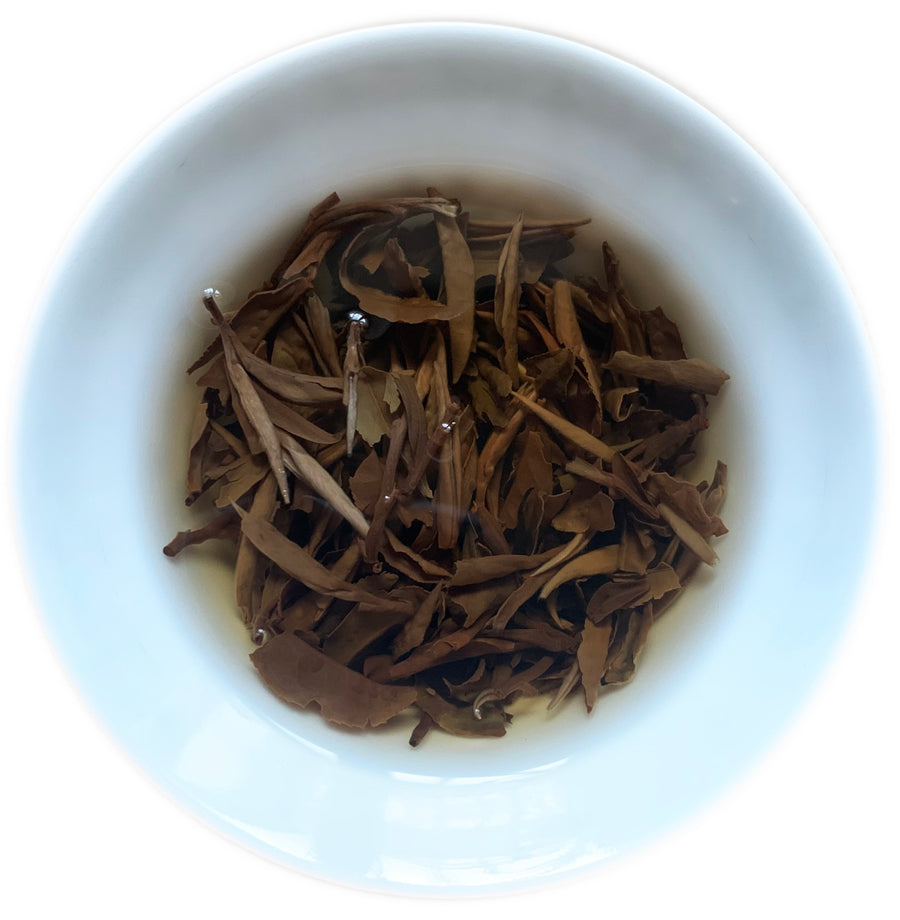
Tea Details
Origin
Fujian
Jianyang County
~1000m
Huangkeng, Aotou village
Liu Family
Process
Spring 2019 (Ming Qian)
Xiao Cai Cha (Qunti)
Light / Dry
-
Taste
Woody, fruity, hay, sweet
Gratin Dauphinois, Tomme de Savoie, Saint-Nectaire, Pear amandine
My Notes
2019 Jianyang Xiao Bai Cha. 3g of tea, brewed in a 60ml Jingdezhen porcelain gaiwan.
The dry leaves carry a deep preserved fruit character. Dried apricot, preserved bayberry, and assorted fruit preserves mixed together, followed by a fresher orange peel brightness, alongside the light volatile citrus and faint medicinal fragrance often found in chenpi aged for two or three years. The aroma immediately triggers salivation.
After rinsing, the fragrance shifts toward a forest atmosphere. Damp bamboo grove air, somewhere between dried bamboo leaves and fresh-cut bamboo, carrying a slight coolness. Gradually, dry herbal notes begin to emerge, reminiscent of air-dried red perilla and preserved plum. The fragrance stays low and settled inside the water.
First infusion, 20 seconds. The leaves release a faint tartness of preserved yellow peach, mixed with the vapor of boiled zong leaves and a light grain aroma. The liquor has thickness without pressing on the tongue, with a noticeable pectin texture. Soft, but with a slight internal tension. Very smooth across the palate. The profile moves toward deeper tones. Light dry herbal notes gradually turn into the darker sweetness of yellow rock sugar. In the back of the mouth appears the scent of old reed mats, while a cooling sensation remains across the palate.
Second infusion, 15 seconds. Wood aroma begins to appear more clearly. The preserved fruit character is still present, though slowly moving toward dried grass and plant material. It recalls haystacks left under summer sun, carrying slight resin and gelatin-like textures, with a faint propolis note in the finish. The sweetness is not direct, more like the lingering moist sweetness left in the mouth after the fragrance of a pear has faded.
Third infusion, 20 seconds. The wood aroma deepens further. Old woven bamboo, boiled zong leaves, and preserved yellow peach overlap together. The plant character inside the tea liquor becomes more apparent. Light dried moss, faint wildflowers from a mountain valley, and the scent of boiled bamboo leaves move in and out quietly. The throat remains cool.
Fourth and fifth infusions, 20 seconds each. Rice grain aroma, dried reeds, and steamed rice cake begin to emerge slowly, crossed by a faint preserved fruit acidity. In the later part of the mouth there is a very light liang fen cao herbal note, while zong leaf aroma and wood remain settled inside the liquor. The sweetness stays low in the mouth, closer to old rock sugar, malt sugar, and propolis-like sweetness.
Sixth infusion, 1 minute. The zong leaf aroma becomes more pronounced. The wood note softens, like old wood slowly touched by moisture over time. The plant character in the liquor turns gentler. Rock sugar sweetness, faint medicinal herbs, cooling sensations, and sweetness remain together in the finish.
Gongfu Brewing Guide
Setup
5g / 100ml
90-95°C
Porcelain teaware, Yixing teapot (pin zi ni, ben shan lu, duan ni)
Brewing
5 seconds
20s · 10s · 15s · 20s · 20s · +60s
Session
6–8
Grounded. Contemplative.
