

216 Nong Xiang Da Hong Pao
216 Nong Xiang Da Hong Pao
Couldn't load pickup availability
Tea Details
Origin
Fujian
Wu Yi Shan
~600m
Shuinan village
Mr. Liu Mingdong
Process
Spring 2025
Pinpei Da hong pao
Medium
-
Taste
woody, nutty, mineral, brioche
Peking duck, Morbier, Kouign-amann
My Notes
216 Da Hong Pao is built less around a single cultivar than around proportion, structure, and the long-term adjustment of a blend across harvests. Fourteen years of refinement sit inside it quietly. Each season shifts slightly depending on the year’s material, weather, and fire, but the core direction remains stable: yan gu (rock backbone) held together with floral lift, depth carried without heaviness.
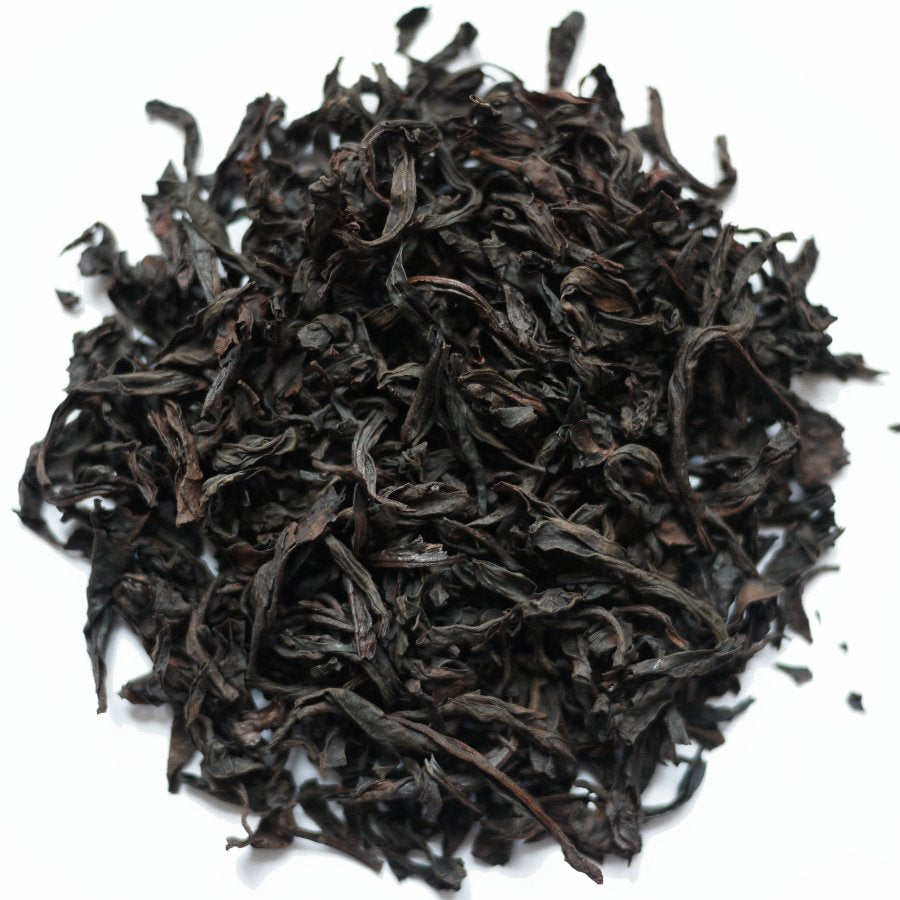
The dry leaf opens with a deep roast fragrance already settled into the tea rather than sitting on top of it. Roasted nuts, longan wood smoke, dried red date, candied citrus peel. Underneath, a darker sweetness closer to cocoa powder and baked stone fruit. The fragrance rises slowly from the warmed gaiwan lid and stays low in the cup.
The liquor enters dense but not thick. Shui Xian contributes the body and slower-moving texture through the palate, while Rou Gui sharpens the edges slightly, bringing a finer structure through the upper mouth and throat. The higher floral register comes from Huang Guan Yin, which lifts the blend with a clearer yellow-flower fragrance and a brighter aromatic line moving through the steam and returning breath. The floral side does not appear as sharp perfume. It stays woven into the roast: yellow blossoms, valley flowers, faint wood-like sweetness appearing after swallowing rather than during the sip itself.
What defines the tea most clearly is the way the roast and fruit remain integrated without separating into layers. The fire is medium-heavy but controlled. It gives warmth and structure without flattening the leaf character underneath. With successive infusions, the darker roast notes gradually recede and the blend opens toward preserved plum, dried apricot, mineral salinity, and a cooler floral lift returning through the breath.
A small proportion of aged material inside the blend changes the rhythm of the tea. The mouthfeel settles deeper into the throat and chest, softening transitions between infusions and extending the aftertaste without making the liquor feel old or muted. The finish remains clean, medium-long, with lingering rock rhyme carrying faint sweetness along the tongue root and palate.
This is not a Da Hong Pao built around immediate aromatic impact. It moves more through structure, continuity, and the shifting balance between roast, mineral depth, floral fragrance, and aged warmth as the session progresses.
Further reading
You can read more about Da Hong Pao and the varietals here : Finding Da Hong Pao
Gongfu Brewing Guide
Setup
8g / 100ml
95-100°C
Pin Zi Ni, Duan ni
Brewing
2 seconds
5s · 8s · 10s · +5s
Session
7-9
Layered, contemplative, velvety
