

-
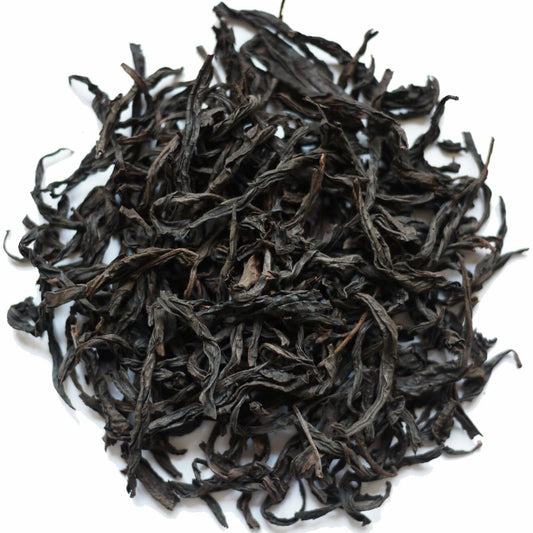
Wuyi Huang Guan Yin
Oolong TeaRegular price From $10.10 USDRegular price
Behind the leaves
A closer look at the people, places, and processes that bring Wuyi Oolong from mountain to cup.
-
 Mr. Zhou & Ms. Liu
The hands and heritage behind your cup.
-
 Terroir
Discover the characteristic land behind the leaf.
-
 Process
The craft that transforms a leaf into an experience.


Journal
Further reading for the curious tea drinker.
-

Fuzhou: A City That Learned to Hold Fragrance
In Fuzhou, jasmine flowers are at their most fragrant for only a few hours. Tea makers learned to work within that window. No flowers remain in the finished cup —...
Fuzhou: A City That Learned to Hold Fragrance
In Fuzhou, jasmine flowers are at their most fragrant for only a few hours. Tea makers learned to work within that window. No flowers remain in the finished cup —...
-

Why Phoenix Dancong Cannot Simply Be Brewed Fas...
Phoenix Dancong responds to brewing with remarkable sensitivity. Discover why quick pours alone rarely reveal its full character, and how small adjustments can unlock greater aroma, texture, and balance throughout...
Why Phoenix Dancong Cannot Simply Be Brewed Fas...
Phoenix Dancong responds to brewing with remarkable sensitivity. Discover why quick pours alone rarely reveal its full character, and how small adjustments can unlock greater aroma, texture, and balance throughout...
-

Qimen An Cha
Why was one of southern China's best-known dark teas named after a place where it was never made? This article traces the history of Qimen An Cha through forgotten trade...
Qimen An Cha
Why was one of southern China's best-known dark teas named after a place where it was never made? This article traces the history of Qimen An Cha through forgotten trade...


